

 Call Us : 1300 800 564
PRP vs Hair Loss Shampoo


PRP Therapy


Hair Loss Shampoo

Platelet-rich plasma (PRP) is a treatment that involves taking blood from the patient and separating the PRP from it to then inject it into the scalp. This can be an effective way to promote hair growth for those with pattern hair loss as it extends the growth phase of hair by stimulating hair follicles.
Hair loss shampoo can potentially aid in the regrowth of your hair depending on the formulation used. Natural ingredients can help to encourage hair to grow and shampoos often contain ingredients like caffeine, ginseng, saw palmetto and ketoconazole for this purpose.
PRP treatment is a minimally invasive procedure that needs to be performed in a clinic by an experienced and trained medical professional. Hair loss shampoo is easily accessible but some research may be required to find the right shampoo for your hair type. Explore the comparison table below to find out more.


- PRP is a non-surgical, regenerative treatment using platelet-rich plasma extracted from the patient’s blood.
- It is aimed at stimulating follicles and improving scalp health.
- Best for early to moderate thinning.
- Professionals conduct PRP in clinics.
- Requires multiple sessions and maintenance.
- Hair loss shampoos are topical products that reduce shedding and support hair strength.
- Commonly include ingredients like caffeine, biotin, or ketoconazole.
- Easy to use daily at home.
- Widely available across Australia.
- It is typically used to supplement other treatments.
- PRP involves higher upfront and long-term costs due to the need for several clinic-based sessions.
- Compared to hair loss shampoos, it is a far more significant financial investment for users seeking regrowth.
- Hair loss shampoos are inexpensive and available over the counter.
- Unlike PRP, they require minimal financial commitment, though results may be limited when used alone.
- PRP is usually delivered once a month over 3–6 months, followed by occasional maintenance.
- Compared to hair loss shampoo, PRP requires structured scheduling and in-person attendance.
- Hair loss shampoos are used daily and integrated into a regular washing routine.
- Unlike PRP, there’s no need for appointments, but visible results may take longer and may be milder.
- PRP involves injecting plasma into areas of hair thinning to revitalise follicles directly.
- Unlike shampoos, it stimulates the internal repair system to produce more precise results.
- Hair loss shampoos are external in their action, cleansing the scalp and delivering active ingredients topically.
- In contrast to PRP, their action is superficial in benefits and not penetrative or stimulating of deep repair of follicles.
- PRP is generally very safe when performed professionally, with minimal risks like minor swelling or redness.
- Unlike shampoo, it’s a procedural treatment with slightly higher medical complexity.
- Hair loss shampoos are usually safe for daily use, but may cause irritation or dryness in sensitive individuals.
- Compared to PRP, they pose less procedural risk but can interact with scalp conditions or allergies.
- PRP requires multiple clinic visits, making it less convenient for users with limited time or access.
- Compared to shampoo, the ongoing scheduling may feel burdensome for some individuals.
- Hair loss shampoos are simple and blend into regular grooming routines.
- Unlike PRP, they are non-invasive and require no medical oversight, offering maximum ease of use.
- PRP treatments are provided in dermatology and aesthetic clinics, mostly in major cities.
- Compared to shampoo, it’s less accessible and may involve waitlists or travel for some users.
- Hair loss shampoos are widely sold in pharmacies and online across Australia.
- In contrast to PRP, they are available to everyone without needing a specialist or appointment.
- PRP can deliver noticeable, long-lasting improvements if maintained, but results may diminish if sessions stop.
- Compared to shampoo, it offers more pronounced regrowth, but at a higher ongoing commitment.
- Hair loss shampoos support general scalp health and may reduce shedding over time.
- Unlike PRP, their results are more subtle and depend heavily on continuous use and individual response.
- PRP is often combined with microneedling, minoxidil, or supplements.
- PRP enhances follicle recovery and fits into combination therapies better compared to shampoo alone.
- Hair loss shampoos complement PRP by improving scalp cleanliness and delivery of other topicals.
- Unlike PRP, they work best as a supportive, secondary measure rather than a primary intervention.
- PRP appeals to users seeking expert-led, results-driven care.
- Compared to shampoo, it offers active medical treatment with clinical oversight and personalised outcomes.
- Hair loss shampoos appeal to users who prefer low-commitment, familiar self-care options.
- Unlike PRP, they provide reassurance through convenience and have more aesthetic appeal than creating dramatic change.
- PRP enhances scalp blood flow, regenerates follicles, and reduces inflammation.
- Compared to shampoo, it offers more profound restorative effects that improve the biological foundation of hair growth.
- Hair loss shampoos improve scalp hygiene, reduce irritation, and may fortify existing hair.
- Unlike PRP, they do not stimulate deep follicular activity or reverse significant thinning.
- PRP produces moderate clinical waste and involves multiple clinic visits, leading to greater travel emissions.
- Compared to shampoo, it has a larger environmental footprint over time.
- Using compact packaging and minimal waste, hair loss shampoos have a lower environmental impact.
- In contrast to PRP, they are more sustainable for long-term daily use.
Shop our hair solutions
We are committed to providing affordable hair regeneration services for people all over Australia. Our formula can help you regain your confidence.
Shop Now

Comparison Summary: PRP vs Shampoo Hair Regrowth
PRP treatment can be an effective short-term solution that requires semi-regular sessions to see and maintain results. Hair loss shampoo can easily be incorporated into your daily routine, but costs and quality can vary, meaning you should do some research before committing to a shampoo.
PRP treatments are more expensive but are not required as often as hair loss shampoo. The effectiveness of hair loss shampoo can vary and may not be as reliable an option compared to PRP treatments. Hair loss shampoo will need to be used consistently to see results, and use may vary depending on hair type.
PRP treatments have some potential side effect,s including initial hair shedding, excess bleeding at the injection site, headaches, allergic reactions and swelling. Some hair loss shampoos contain chemicals that interact with hormones in the body, which can activate estrogen receptors, leading to breast growth.
If too much shampoo is used it can remove too many of the natural oils on your scalp which can lead to dryness and frizz along with breakage and hair loss.
User Guidance
Hair loss shampoos are easy to use and are compatible with your daily routine. They are also widely available at different price ranges and formulations depending on your hair type. PRP treatments may require some travel to receive the sessions in a clinic and may be disruptive to your routine with semi-regular top-ups required.
Hair loss shampoos can be combined with other treatments like minoxidil and finasteride but further research is needed to see the efficacy of these combinations. Studies have indicated that PRP can be combined with other treatments like microneedling and minoxidil to provide effective results.
PRP treatments can provide other benefits to the skin such as managing pain and reducing acne. Hair loss shampoo can improve hair volume if the product has a pH of 5.5 or less.
Take Our Hair Loss Quiz to See Which Treatment Suits You?
Take A Hair Quiz

Frequently Asked Questions
PRP is a clinic-based treatment that uses your own blood plasma to stimulate hair follicles and extend the growth phase, making it a great option for those wanting a medical, results-driven approach. Hair loss shampoo is a convenient, daily solution that can support scalp health and reduce shedding, especially if you prefer a non-invasive, at-home routine. The best choice depends on your hair loss stage, budget, and how hands-on you want your treatment to be.
PRP can show visible improvements in hair thickness and density within three to six months, with some users seeing changes as early as one to two months. Hair loss shampoos usually take longer to show results, and improvements are often more subtle, depending on the ingredients and how regularly you use the product.
PRP is generally safe when performed by professionals, but potential side effects include temporary swelling, redness, mild discomfort, and very rarely, infection or allergic reaction. Hair loss shampoos are usually well tolerated, but some can cause dryness, irritation, or interact with hormones, especially if overused or if you have sensitive skin.
Yes, PRP can be combined with hair loss shampoo for a comprehensive approach. Using both may help you address hair loss from different angles, with PRP stimulating deeper follicle repair and shampoo supporting scalp cleanliness and delivering beneficial ingredients.
Look for clinics with experienced medical staff, positive patient reviews, and clear before-and-after results. Book a consultation to discuss your goals, learn about the process, and ask any questions about aftercare and expected outcomes.
Choose a shampoo with clinically supported ingredients such as ketoconazole, caffeine, or saw palmetto, which can help block DHT or improve scalp blood flow. Make sure the product suits your hair type and addresses your specific hair loss concerns.
PRP is a more significant financial investment, requiring multiple clinic sessions and some maintenance over time. Hair loss shampoos are less expensive per purchase and easy to access, but require ongoing buying for continued results.
Both treatments require ongoing use to maintain benefits. If you stop PRP sessions, the improvements may gradually fade. If you stop using hair loss shampoo, any gains in scalp health or reduced shedding are likely to diminish over time. Consistency is important for sustained results with either option.
Other Comparisons
See All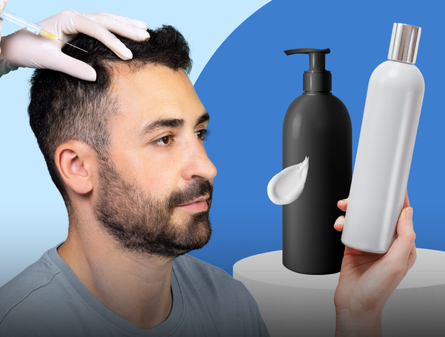
PRP vs Hair Loss Shampoo

Hair Vitamins vs Hair Loss Shampoo
PRP vs Hair Vitamins
Hair Gummies vs PRP

Hair Pills vs Hair Loss Shampoo


