Call Us : 1300 800 564
Discover the Potential of Dutasteride Treatment
Learn more about the benefits of dutasteride for your hair.
What is Dutasteride?

Overview of the Treatment
Dutasteride is a dihydrotestosterone (DHT) blocker. This is the hormone that binds to hair follicles, causing them to shrink and eventually leading to hair loss. It can be helpful to treat hair loss as a result of androgenetic alopecia (pattern balding).
How it Works?
Compared to other DHT blockers like finasteride, dutasteride blocks all three types of isoenzymes responsible for DHT conversion. In comparison, finasteride only covers two. Learn more.
Who it’s For?
Dutasteride can be used off-label for the treatment of hair loss in men and women, but you should discuss with your doctor if you have issues with your liver or a family history of prostate cancer. Learn more.
Why Choose Dutasteride?

Comprehensive DHT Blocker
Dutasteride blocks all three types of isoenzymes that cause DHT to bind to hair follicles.

Positive Results
Serum DHT levels were reduced by up to 92% while taking dutasteride, according to research.

Convenient Treatment
Dutasteride is usually taken as a daily pill, making it highly compatible with daily routines.

Finasteride Alternative
If you’re not seeing results on finasteride, dutasteride might be a more effective DHT blocker.
Wide Suitability
It can work for men and women to prevent further hair loss and regrow hair.
How does Dutasteride work?

Consultation
You’ll need a prescription for dutasteride, so you’ll need to talk to a doctor in a clinic or arrange a virtual consultation.
Step 1
Takes 3 - 5 min

Pill Intake
Take your pill daily at the same time.
Step 2
Takes 5 min
Consistency
You need to take the medication consistently to see results, as a certain amount of the drug needs to be in your body at all times.
Step 3
Takes 15 min
Growth
You can start to see results from as early as 3 months, but you should wait 6 months to see improved hair growth.
Step 4
Takes 3 - 5 min
Long-Term Treatment
If you stop taking the medication, any growth gained can be reversed, and your hair loss can continue, so it’s designed to be a long-term treatment.
Step 5
Takes 5 min

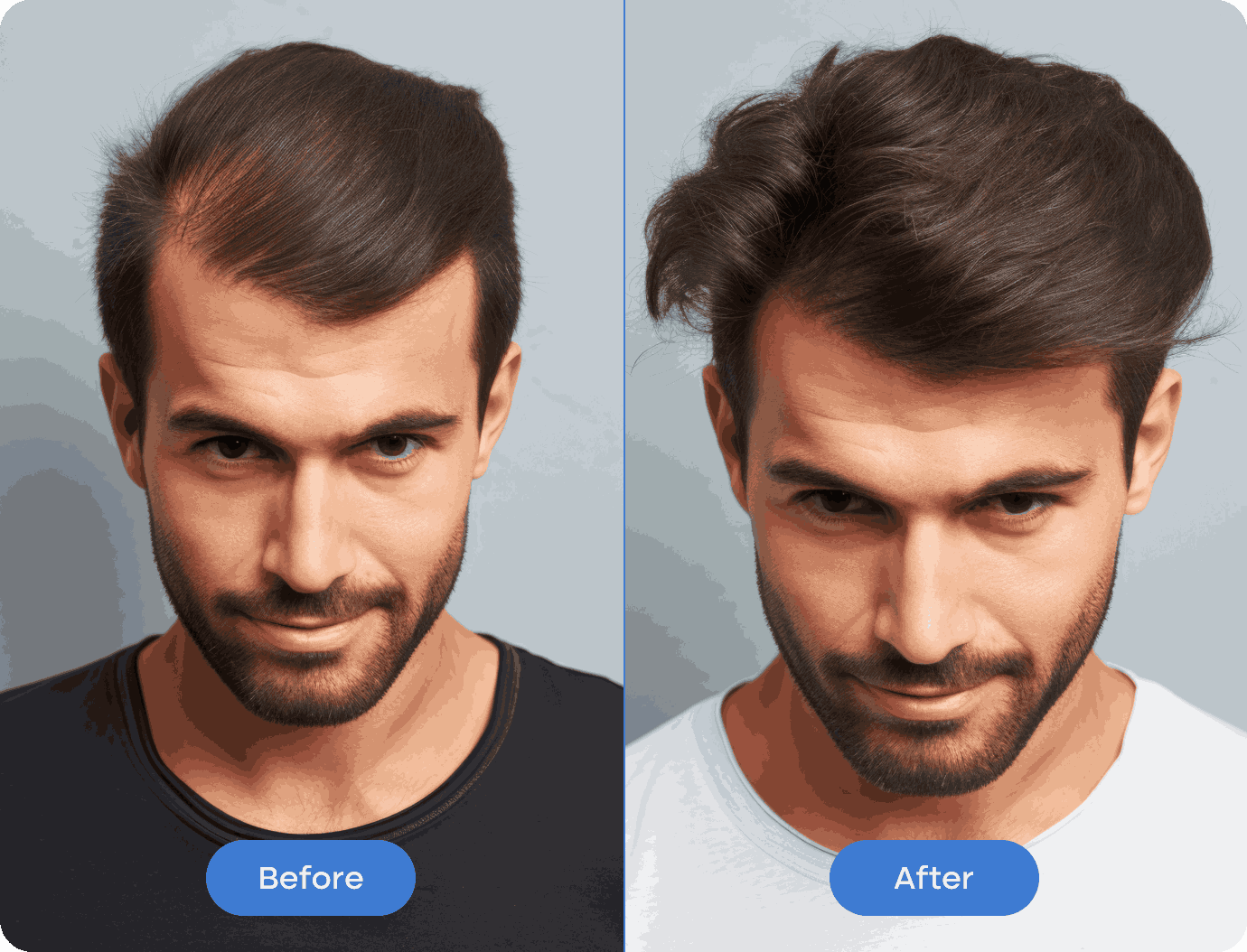
Real Results from Therapy - Before and After

With Hairy Hair it is really easy to communicate, if there are any issues there is more understanding and solutions than I've experienced previously. I'm happy with the process and journey so far.

Eagleone
With Hairy Hair it is really easy to communicate, if there are any issues there is more understanding and solutions than I've experienced previously. I'm happy with the process and journey so far.
Cam
With Hairy Hair it is really easy to communicate, if there are any issues there is more understanding and solutions than I've experienced previously. I'm happy with the process and journey so far.
Tahir
Ultimate Guide to Dutasteride
Find out everything there is to know about dutasteride from clinical research to availability and suitability
- Long-Term Effectiveness
- Average Cost
- Sustainability of Results
- Treatment Compatibility
Not sure if Dutasteride is right for you?
Compare with other Treatments!
Dutasteride vs Hair Loss Shampoo

Hair Pills vs Dutasteride

Hair Gummies vs Dutasteride

Finasteride vs Dutasteride
Minoxidil vs Dutasteride
Dutasteride vs Hair Vitamins
Hair Transplant vs Dutasteride

Laser Therapy vs Dutasteride
Microneedling vs Dutasteride
PEMF vs Dutasteride
PRP vs Dutasteride
Try our expert Hair Loss Solutions
Take a look at our recommendations for the best hair growth products in our shop that may help your hair look healthier and feel better.
View Our ShopHelpful Resources



Loved by people
“Been using it for 3 years, and couldn’t be happier”
Thanks to the support and expert advise of Hairy Hair I have not only saved the hair I had but also reclaimed my hairline. Took about a year for me to notice regrowth but now 3 years down the track I couldn’t be happier or confident thanks to the results.

Tahir - Melbourne
“Within 2 months I saw dramatic change
Truly blown away by this product. I almost reached a stage where I thought it was time to shave it all off! I wore a cap pretty much everyday, always self-conscious without it. A good friend of mine recommended Hairy Hair, I thought “why not” I’ll do it for 6 months and see what happens. The results are astounding. Within 2 months I saw a dramatic change. I still have hairs growing that I didn’t think were going to come back. Plus, I don’t lose hair in the shower anymore!! Bring on the next few months. Thank you, Hairy Hair!

Cam - Gold Coast
“Wow, awesome product”
All I can say is WOW awesome & a product that works. I won’t use anything else. Service is excellent & can see little hairs on my head it’s truly amazing, much appreciated.

Eagleone - Brisbane
Explore our full range of hair regrowth products
Shop NowFrequently Asked Questions
Finasteride and dutasteride are both DHT blockers. The difference is that finasteride blocks types 2 and 3 of the 5-alpha reductase isoenzymes that cause testosterone to convert into DHT. Dutasteride covers all three types. It may be more effective since type 1 and type 2 of these isoenzymes are thought to be the most common causes of hair loss out of the three.
Some people end up switching from finasteride to dutasteride. Since dutasteride may have a higher chance of negative side effects, it’s recommended to try finasteride first to see if it works. Doctors typically advise trying finasteride for 6-12 months to see if it is effective. Since dutasteride covers more types of isoenzymes that convert testosterone into DHT, it may help more with your hair loss if finasteride isn’t working for you.
You can’t donate blood while taking dutasteride and for at least 6 months after you stop taking the drug. This is because the medication is carried in your blood and can cause birth defects if a pregnant woman receives blood with dutasteride in it. For this reason, dutasteride is also not recommended for pregnant women or men who are trying to have a baby.
You should take your dose of dutasteride as soon as you remember if you forget. If it’s near to your regular time of day you would usually take the medication, don’t double up on your dose. If you miss a dose every now and then, it shouldn’t have too much impact on your results, but the drug needs to be in your system consistently to see improvements in hair regrowth.
There are rare but serious side effects from dutasteride, including allergic reactions, tightness in the chest, difficulty breathing, and swelling. Less than 1% of patients saw other side effects relating to sexual function, such as decreased libido, ejaculatory issues, and impotence. If you experience any of these adverse reactions, you should contact your doctor to discuss altering your prescription.