

 Call Us : 1300 800 564
Prescriptive Treatments
Take control of your hair loss with targeted hair loss medication. You’re better able to tackle your hair loss when you know why it’s falling out. Explore the Hairy Hair range of hair loss medication today.

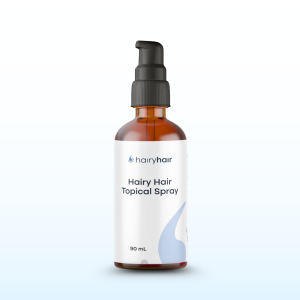
Hairy Hair Minoxidil Custom Topical – Women
Designed for women experiencing androgenetic hair loss Custom-formulated minoxidil topical designed to…
From $75.00 every 3 months and a $225.00 Upfront Charge
Hairy Hair Minoxidil Custom Topical – Men
Designed for men experiencing androgenetic hair loss Custom-formulated minoxidil topical designed to…
From $85.00 every 3 months and a $255.00 Upfront Charge
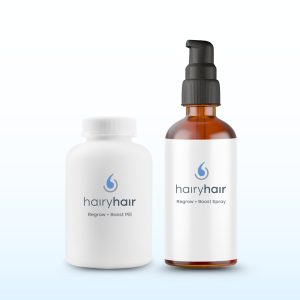
Premium Pill + Topical
Regrow + Boost Duo unites the strength of advanced oral supplementation with…
From $95.00 / month with a 3-month Upfront and a $285.00 Upfront Charge

Premium Pill with vitamins
Get total hair support with Hairy Hair Complete Pill—an all-in-one daily supplement…
From $75.00 / month with a 3-month Upfront and a $225.00 Upfront Charge

Premium Men’s Topical Spray
Advanced prescription topical spray designed for men to both regrow hair and…
From $60.00 / month with a 3-month Upfront and a $180.00 Upfront Charge

Hairy Hair Topical Spray
Topical regrowth solution for both men and women. Boosts hair follicle health…
From $55.00 / month and a $276.00 Upfront Charge

Hairy Hair Gummy Pill
Enjoy dual-action hair regrowth and defence in a delicious gummy. Hairy Hair…
From $80.00 / month with a 3-month Upfront and a $240.00 Upfront Charge

Hairy Hair Female Pill
Dual-action prescription capsule for women with a hair regrowth agent and a…
From $50.00 / month with a 3-month Upfront and a $150.00 Upfront Charge
Female Pill (Premium)
Dual-action prescription capsule for women with a hair regrowth agent and a…
From $50.00 / month with a 3-month Upfront and a $150.00 Upfront Charge

Hairy Hair Pill
Experience dual-action hair regrowth and defence with Hairy Hair Pill, combining two…
From $70.00 / month with a 3-month Upfront and a $210.00 Upfront Charge

Boost Pill
Supports increased hair density by stimulating follicles directly. Helps reduce visible shedding…
From $33.00 / month with a 3-month Upfront and a $99.00 Upfront Charge

Hairy Hair Minoxidil 5% Advanced Topical Spray for Men
This powerful leave-in topical combines Aloe Vera, Biotin, Caffeine, and Vitamin E…
From $125.00 every 3 months

Frequently Asked Questions
More FAQsMost hair loss treatments are meant to be used long-term. You might be tempted to stop taking the pills or putting on the serum if you see your hair regrow. But if you stop your treatment, any hair you’ve recently grown can fall out, and your hair loss can continue.
It’s all about what works with your routine. Do you prefer taking a pill in the morning? Or would it suit you better to apply something to your scalp as part of your hair care routine? See what works best for you and your lifestyle.
Side effects vary with the medication. They’re typically low, but it’s helpful to have an idea of what might occur. Minoxidil has typically localised side effects such as irritation or a rash on the area that it’s applied to. Finasteride is more systemic as it can make things such as decreased libido or mood changes happen.
There have been many drugs for baldness under study for decades. Minoxidil for baldness since the ’80s and finasteride since the ’90s. Therefore, we have a lot of data that informs us what happens with these drugs in the long term.
That all depends on your hair loss. Some people only take one medication and see great results. If one medication isn’t doing the job, then combination treatments can improve your chances of seeing regrowth. This is because they target different hair loss issues to give you a comprehensive approach.
Finasteride isn’t the only DHT blocker. In fact, you can find it in many natural sources like saw palmetto and pumpkin seed oil. There’s also another medication called dutasteride. It’s only approved in Japan and South Korea for hair loss, but people can get it prescribed off-label if finasteride isn’t working for them.
Missing a pill or an application now and then is normal. People do see the best results when they are consistent, though. If you forget, don’t double dose and just take the next one when you remember it or skip it if it’s close to your next dose.


